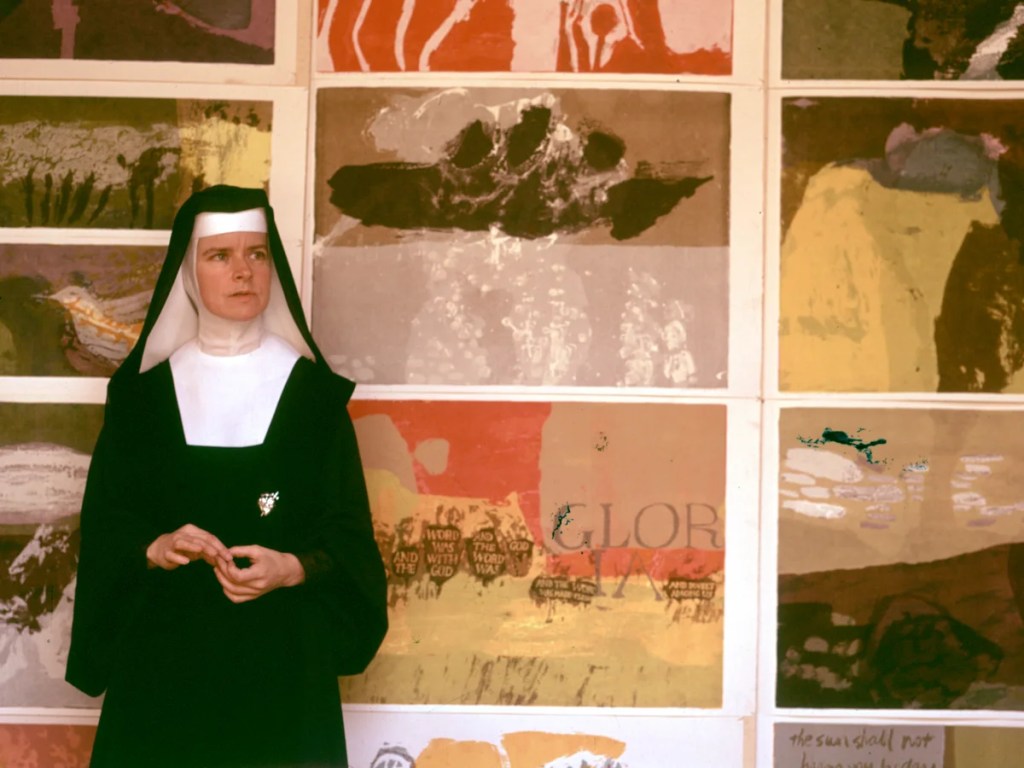
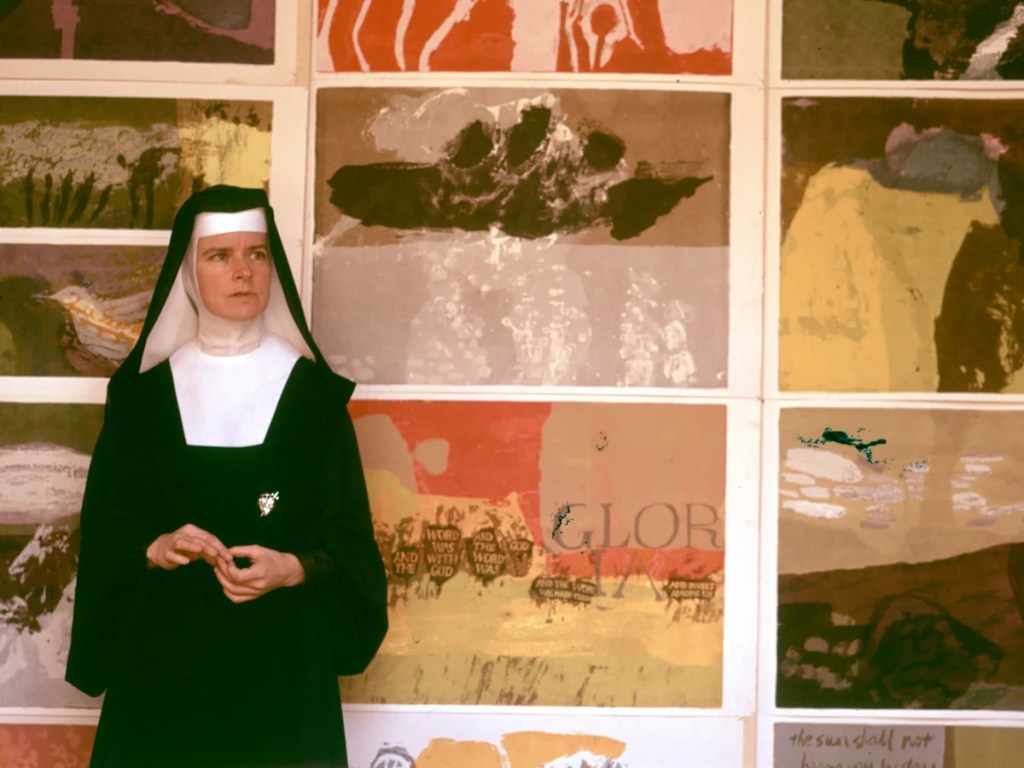
Few artists managed to dissolve the boundaries between art, activism, education, and spirituality as powerfully as Corita Kent. Known for her vibrant silkscreen prints filled with bold typography, saturated colour, and fragments of poetry, advertising slogans, scripture, and political commentary, Kent transformed graphic language into a tool for hope and resistance. Her work remains deeply influential not only in contemporary art and design, but also in visual communication, social practice, and creative education.
Born Frances Elizabeth Kent in 1918 in Iowa, she entered the religious order of the Sisters of the Immaculate Heart of Mary in Los Angeles at a young age, later becoming known as Sister Mary Corita. During the 1950s and 1960s, while teaching art at Immaculate Heart College, she developed an artistic language that felt radically modern for its time. Influenced by pop art, advertising, experimental typography, and spiritual philosophy, she borrowed visual strategies from mass culture and reassembled them into emotionally charged compositions that spoke about peace, love, inequality, war, and human dignity.
Her Work
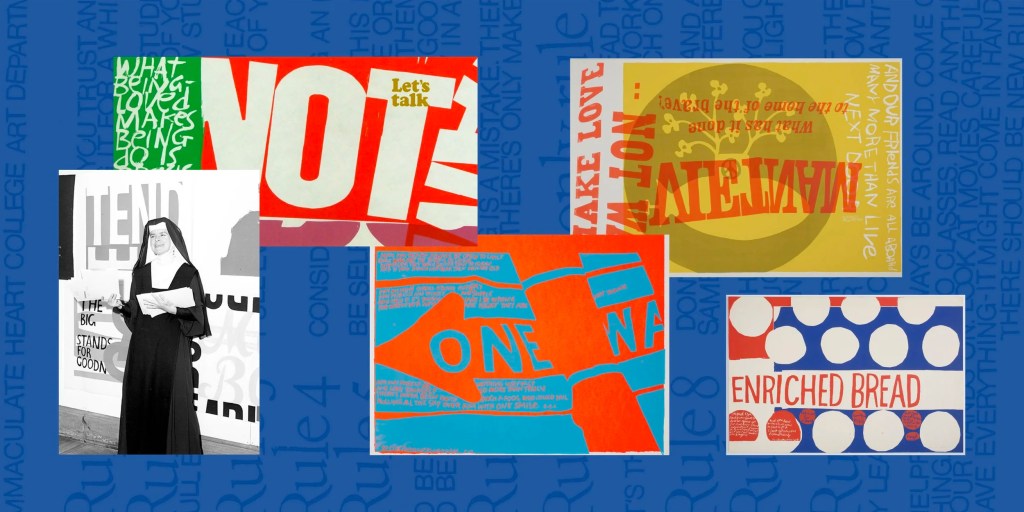
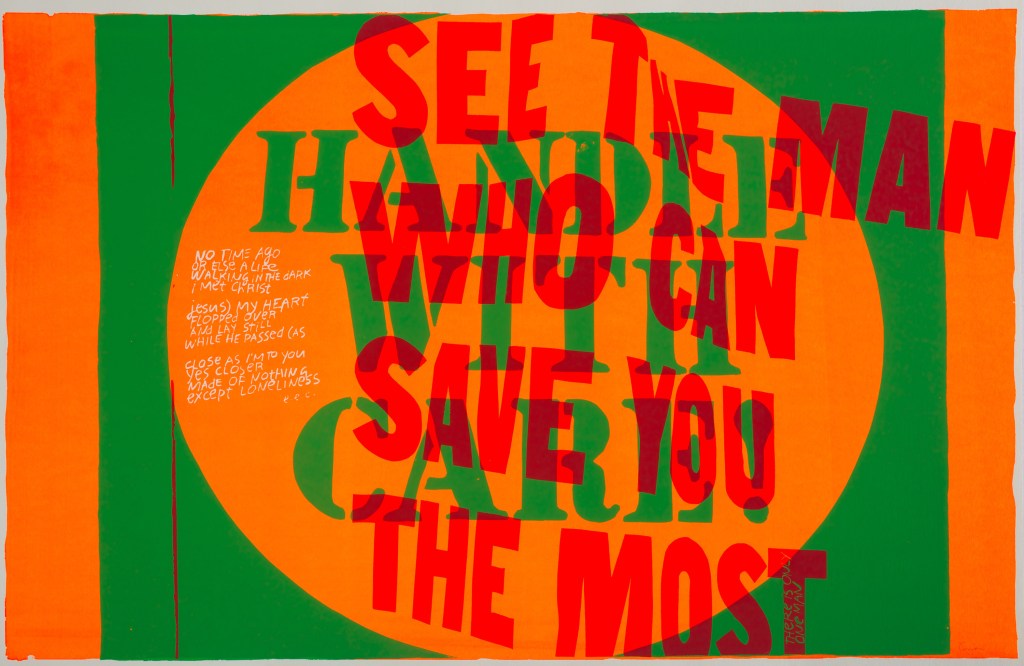
What makes Corita Kent’s work so distinctive is the way she treated text as image. Words were never merely captions in her prints. They became rhythm, texture, movement, and emotion. Fragments from song lyrics, newspaper headlines, biblical passages, and corporate branding collided in layered compositions that demanded attention. In one print, a supermarket slogan could become a meditation on compassion. In another, a line of poetry might transform into a protest against violence or injustice. Her ability to reframe familiar language revealed how visual culture shapes thought, belief, and collective emotion.
At a time when pop art often carried irony or detachment, Corita Kent approached popular imagery with sincerity and optimism. While artists like Andy Warhol explored consumerism through repetition and ambiguity, Kent used similar visual tools to create empathy and social awareness. Her work addressed the civil rights movement, the Vietnam War, poverty, and political unrest, yet it consistently carried an undercurrent of hope. She believed art should not be isolated from everyday life. Instead, it should participate in it fully.
Her educational philosophy was equally revolutionary. Corita encouraged experimentation, playfulness, and observation. She famously promoted the idea that creativity belonged to everyone, not only to trained artists. One of the most enduring examples of this philosophy is the set of “rules” developed with her students at Immaculate Heart College, often referred to simply as “Some Rules for Students and Teachers.” These guidelines challenged rigid structures around learning and creativity, advocating curiosity, discipline, risk-taking, and openness to the unexpected. Decades later, designers, educators, and artists still circulate these principles as a manifesto for creative practice.
Visually, Corita Kent’s work feels timeless. Her use of oversized typography, fluorescent colours, cropped imagery, and layered compositions anticipated many strategies common in contemporary graphic design. Looking at her prints today, it is difficult not to see echoes of editorial design, street posters, branding systems, protest graphics, and digital collage culture. Yet beyond aesthetics, her work continues to resonate because of its emotional clarity. She understood design not simply as decoration, but as communication capable of shaping social consciousness.
In later years, after leaving religious life, Kent continued producing public commissions and prints, including the famous “Rainbow Swash” gas tank in Boston, which transformed industrial infrastructure into an optimistic civic landmark. Even as her visual language evolved, her commitment to accessibility and public engagement remained constant.
Today, Corita Kent occupies a unique position within art and design history. She was simultaneously a nun, educator, activist, printmaker, designer, and cultural critic. Her practice reminds us that visual communication can be both aesthetically striking and deeply humane. In an era saturated with images and information, her work feels increasingly relevant because it insists that language, colour, and design still possess the power to connect people, challenge systems, and inspire collective imagination.
 martasjournal